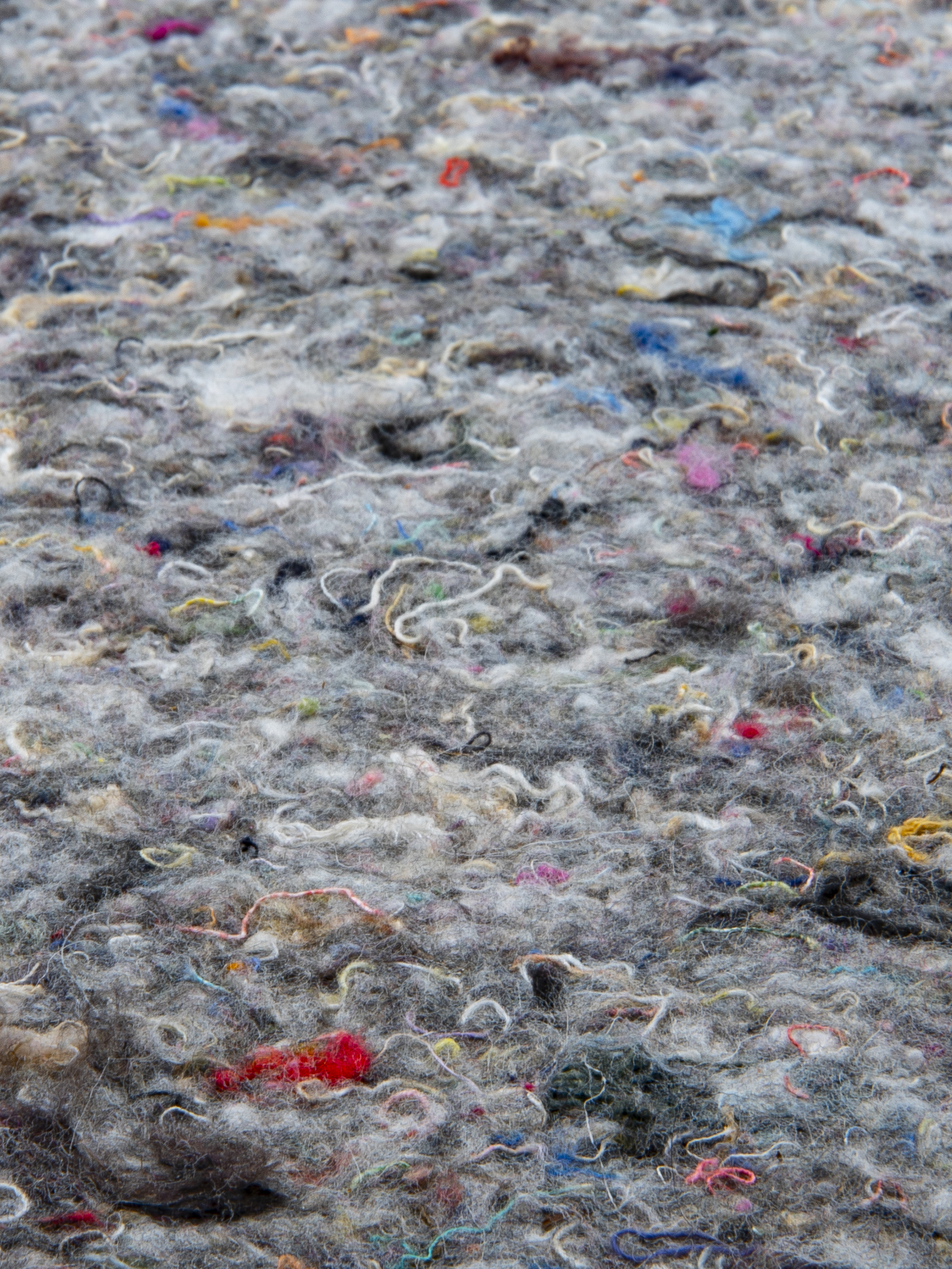
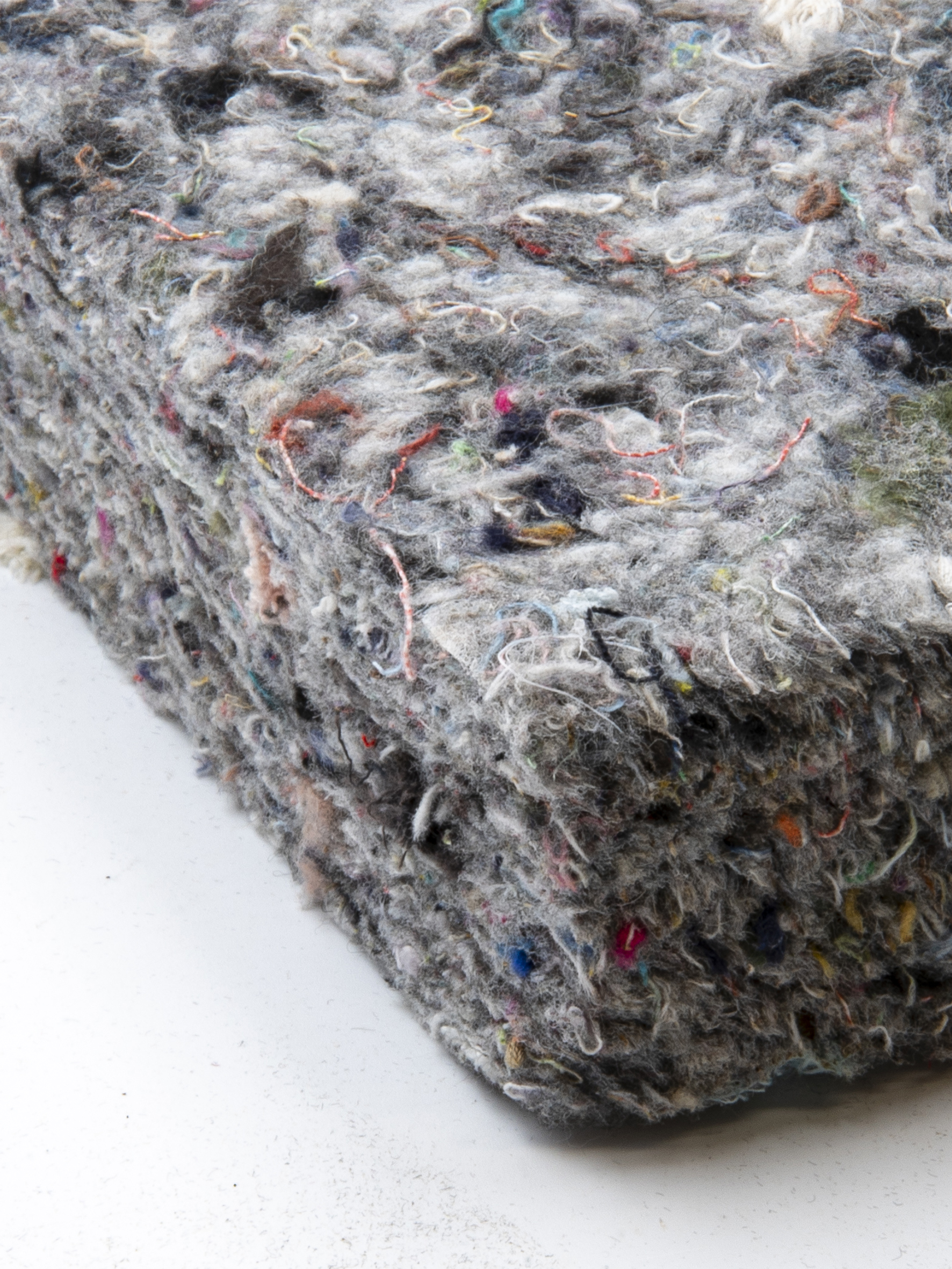
These insulating panels are made entirely from recycled textile fibres. The raw materials come from both industrial processing waste (pre-consumer) and discarded textiles (post-consumer). The supply chain is deliberately short in order to minimise transport and therefore environmental impact.
The production process begins with the sanitisation of the fibres, which are subjected to heat treatment at approximately 180 °C. This phase serves to sterilise the raw material, eliminating impurities, biological contaminants and odours. The fibres are then processed without the use of water, adhesives or chemical additives: the cohesion of the material is not achieved through external substances, but through heat. In fact, through a thermobinding process, the fibres are compacted and fixed in a stable manner, creating a solid and resistant structure.
At this point, the material is transformed into insulating panels or felts, with thicknesses, dimensions and densities calibrated according to the required thermal and acoustic performance. Before being marketed, the products undergo quality controls that certify their technical characteristics. Once the parameters have been verified, the panels are packaged in packaging designed to minimise the use of materials and, in turn, promote recycling.
This production process is a concrete example of the circular economy: it combines the valorisation of textile waste, the reduction of environmental impact along the supply chain and the creation of an ecological and efficient insulating material that combines innovation, technical performance and sustainability.
Main source of the description
Manifattura Maiano. (s.d.). Recycletherm Km0. Isolanti Maiano.