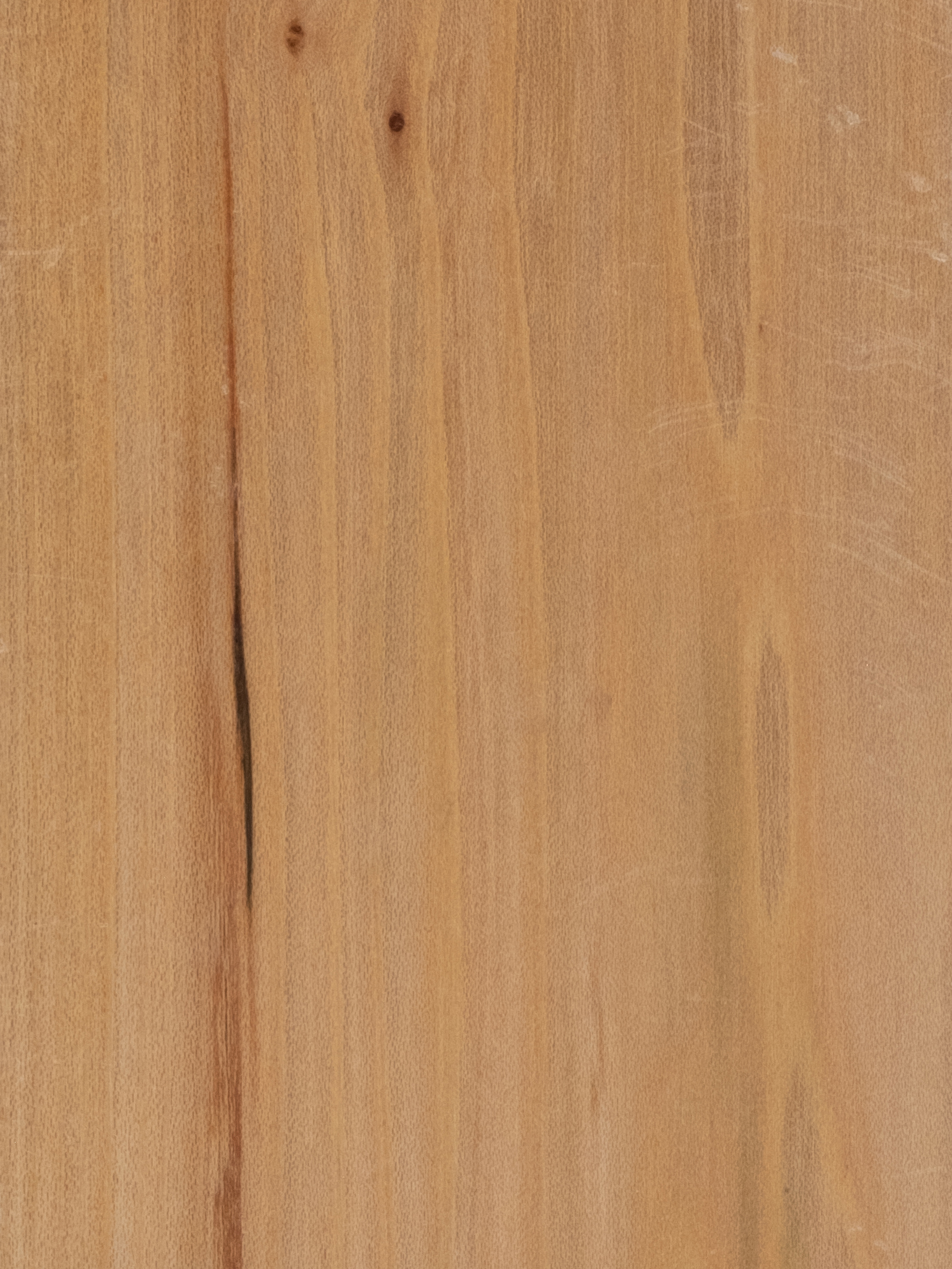
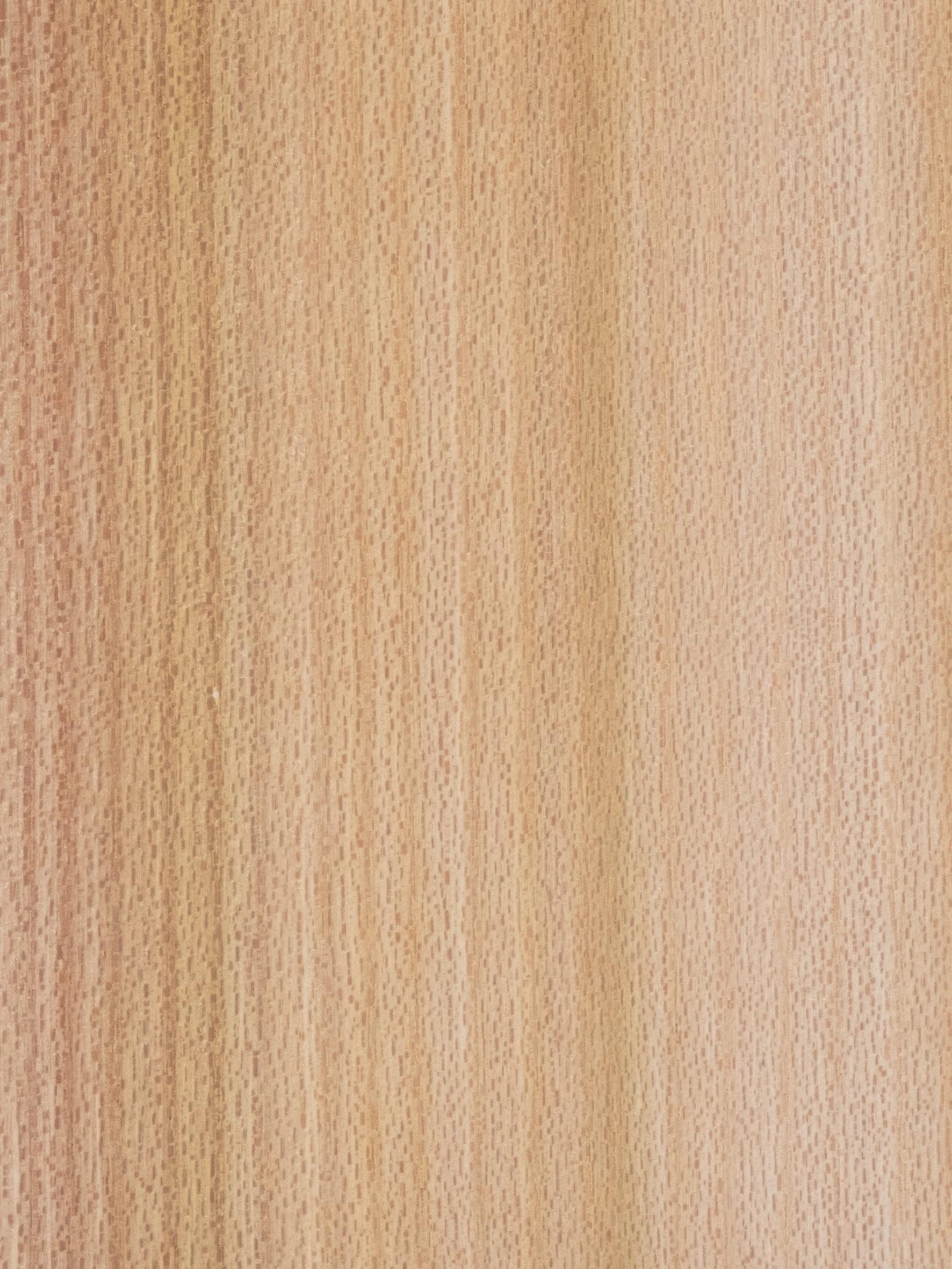
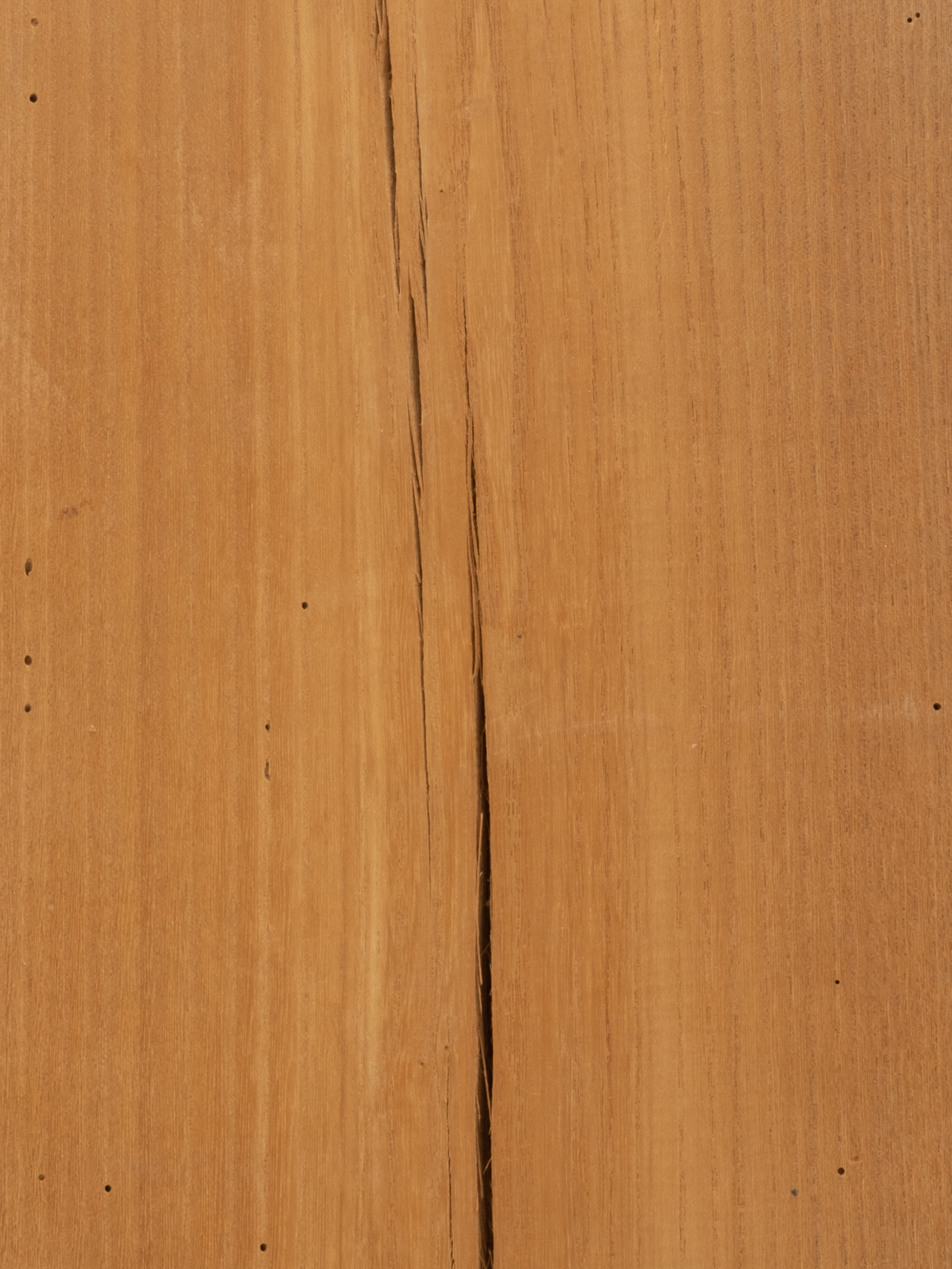
Elm wood is particularly prized for interior design, both as veneer and solid wood, thanks to its decorative appearance and distinctive grain.
The colour of the heartwood, which varies from the light brown of mountain elm to the chocolate brown of field elm, gives the wood a warm and distinctive appearance. The sapwood, on the other hand, ranges in colour from yellowish-white to grey, but is less stable and more vulnerable to external agents.
Elm wood is known for being heavy, hard and coarse-grained. Field elm, in particular, is generally more highly prized than mountain elm due to its greater hardness, durability and more intense colouring.
It is considered a heartwood, therefore naturally resistant, especially in humid environments or in contact with the ground.
From a botanical point of view, both field elm and mountain elm are native to Central Europe. Both species prefer deep, humus-rich, clayey soils. They often grow isolated or in small groups along avenues, in parks and gardens, contributing to the urban landscape with their imposing presence.
Main source of description
Material-Archiv. (2023). Ulme. Material-Archiv.
Other sources
Natterer, J., Volz, M., Volz, M., & Herzog, T. (2001). Atlante del legno ([rist.]). UTET.