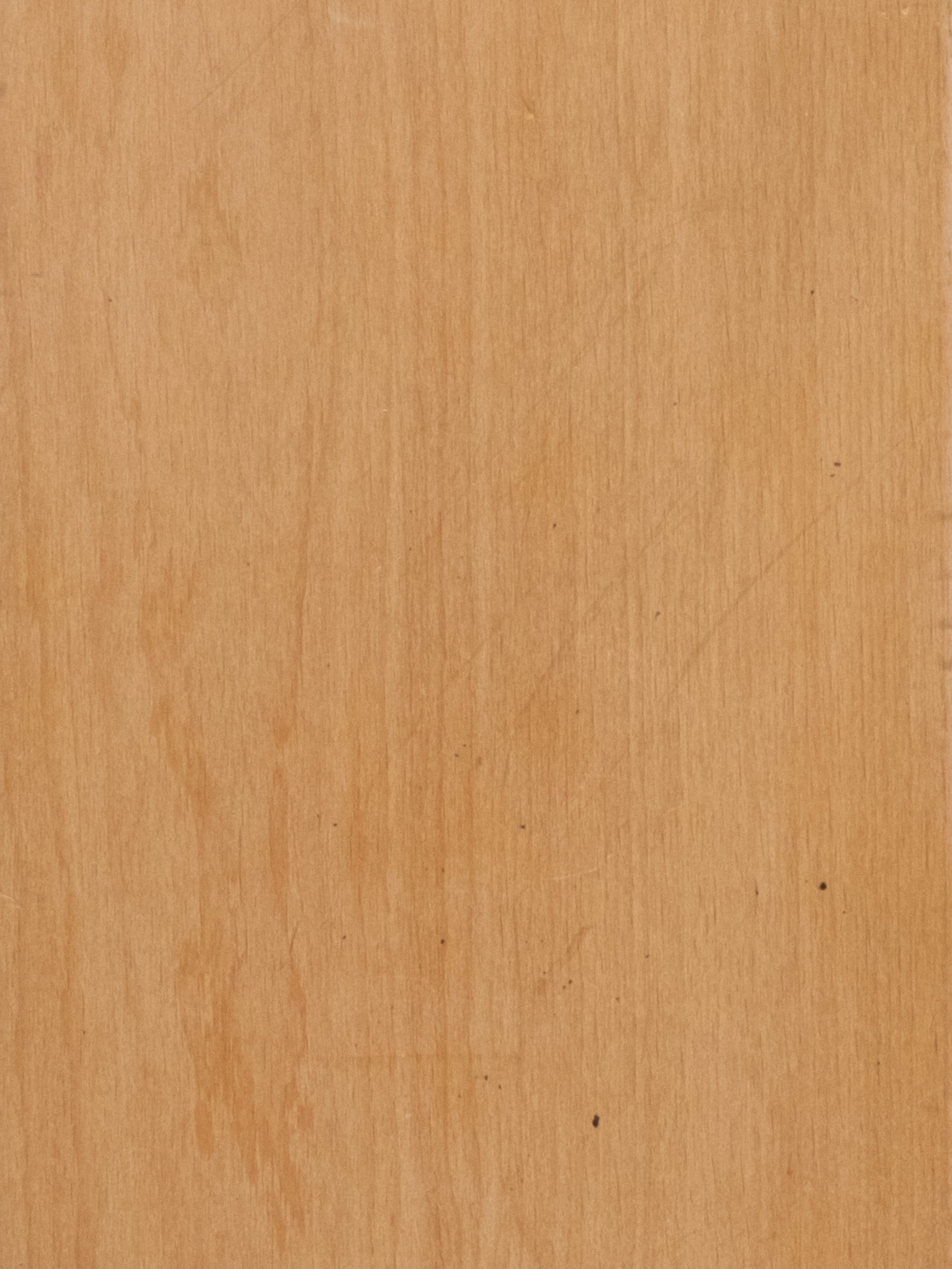
In Switzerland, European beech is the most widespread tree species.
Its wood is characterised by a uniform colour across the entire cross-section of the trunk, with shades ranging from light cream to pinkish brown. However, it is not very resistant to moisture: it tends to rot quickly when exposed to the elements and can take on bluish tones when attacked by specific moulds, showing considerable sensitivity in terms of colour and structure.
Beech wood is widely used in the production of furniture and interior furnishings, but also in the manufacture of sports equipment, toys and laminated panels, such as rods and boards. It is also often used to make veneers and plywood through slicing and cutting processes.
In recent years, beech has also become increasingly important as a source for the chemical industry. Its wood is used to produce high-quality cellulose, which is used in the production of synthetic fibres. In addition, its ash, rich in potassium compounds, is valued as an excellent base for the production of soda.
Beech wood is susceptible to fungal and insect infestation, rodents and termites.
The main source of the description
Material-Archiv. (2024). Buche.
Other sources
Natterer, J., Volz, M., Volz, M., & Herzog, T. (2001). Atlante del legno ([rist.]). UTET.