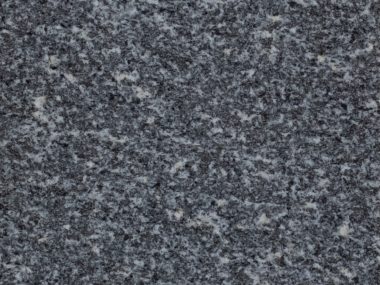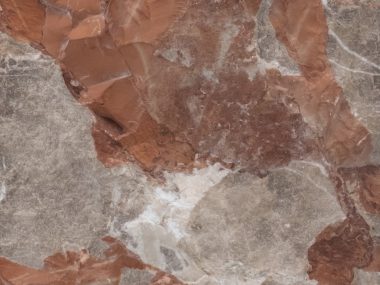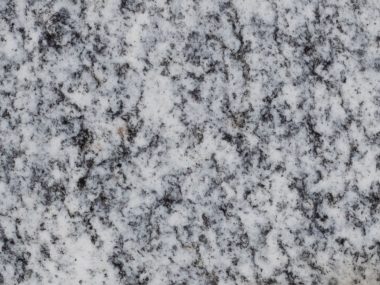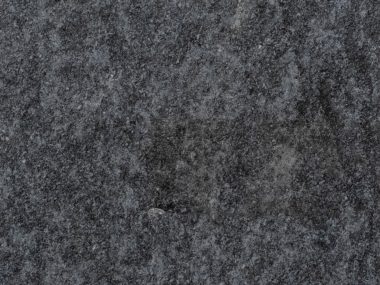
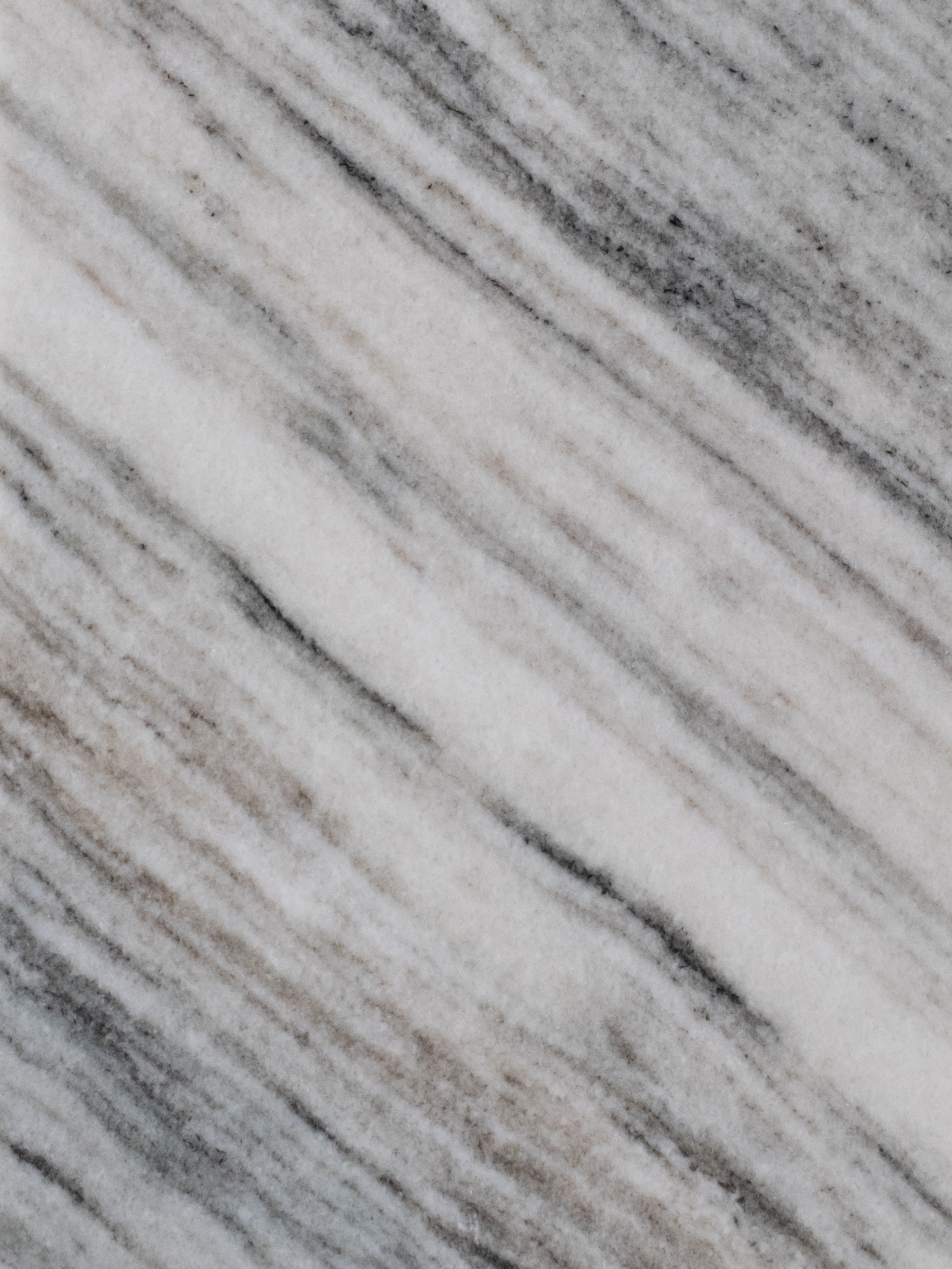
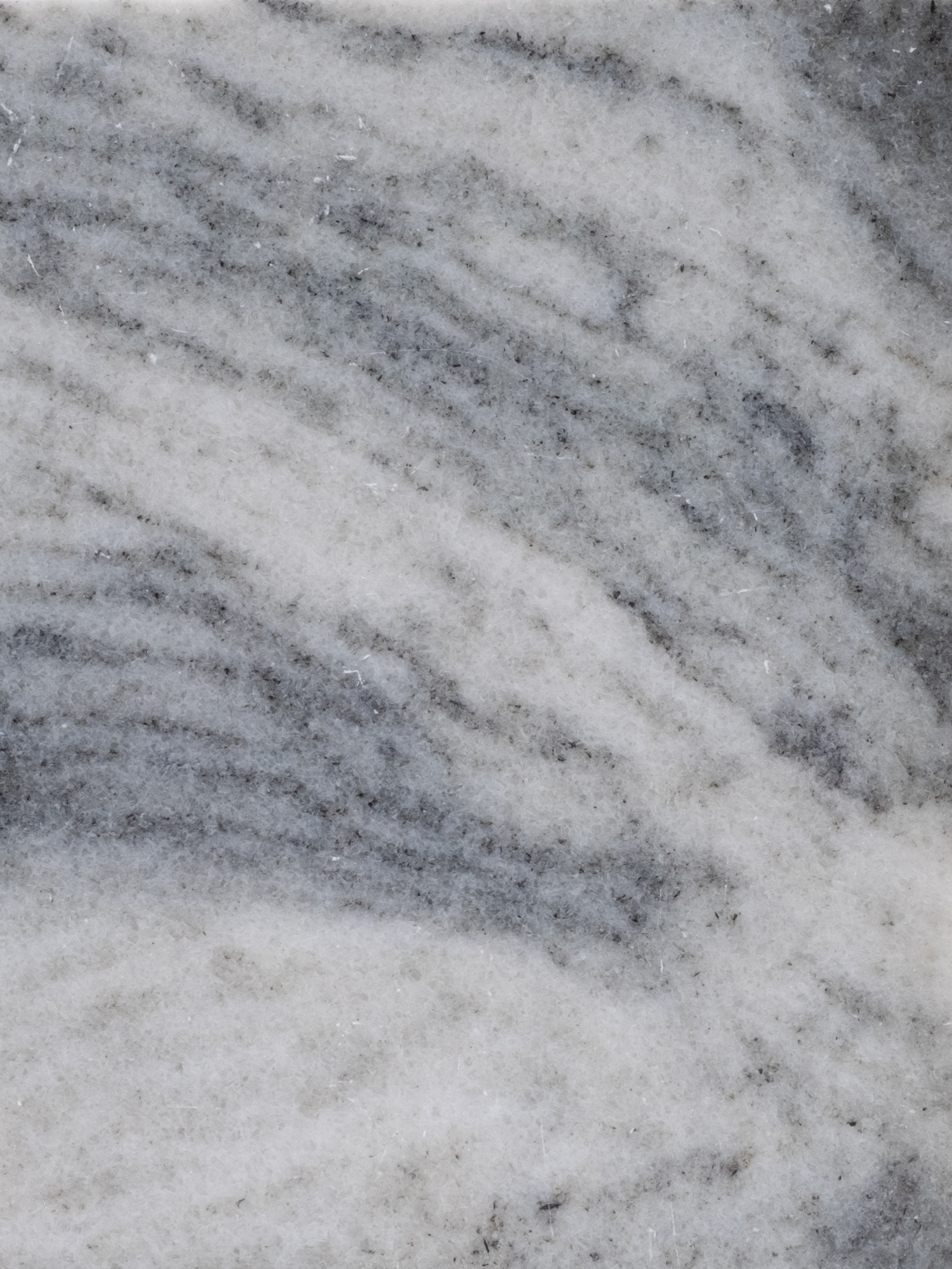
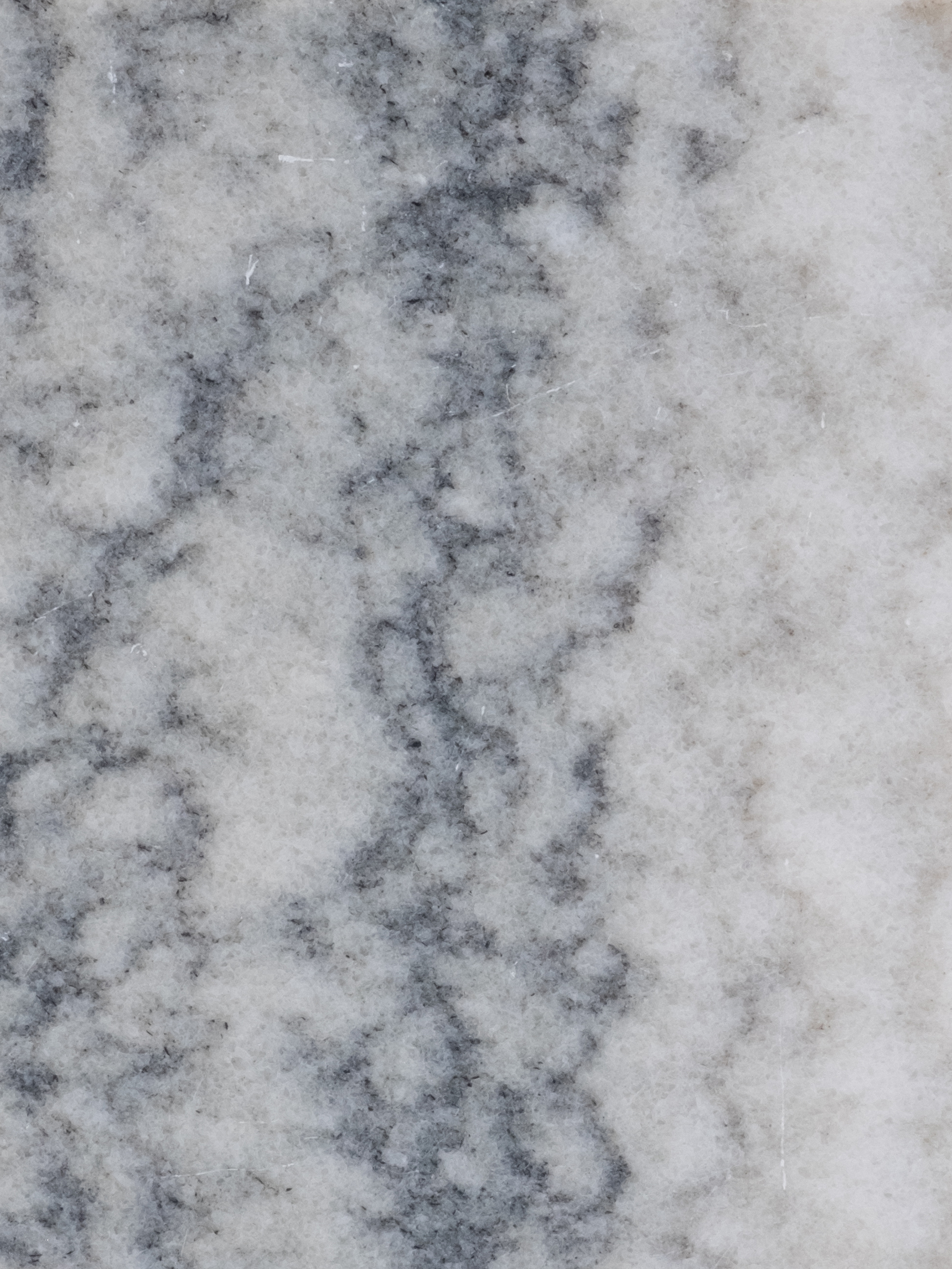
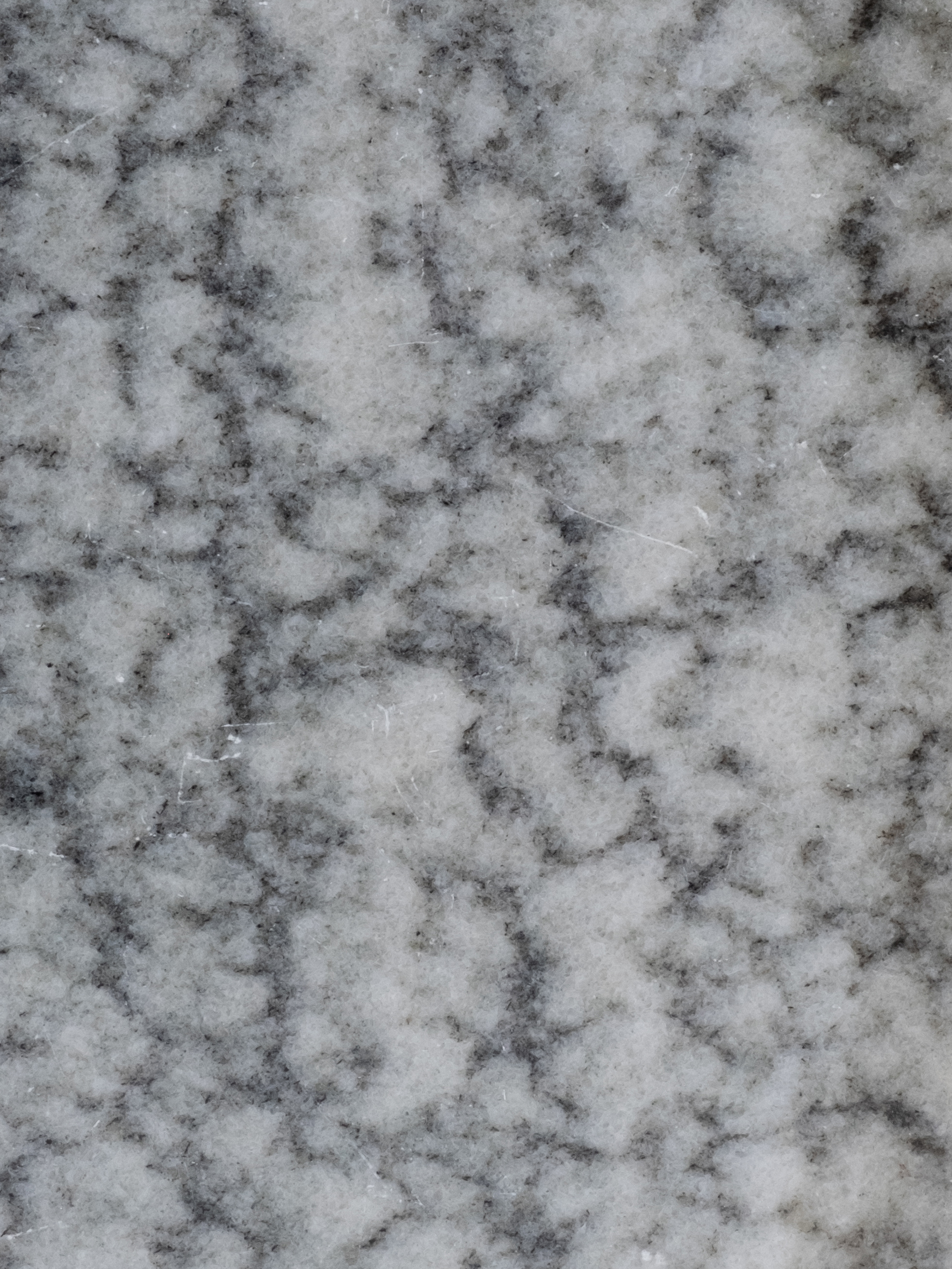
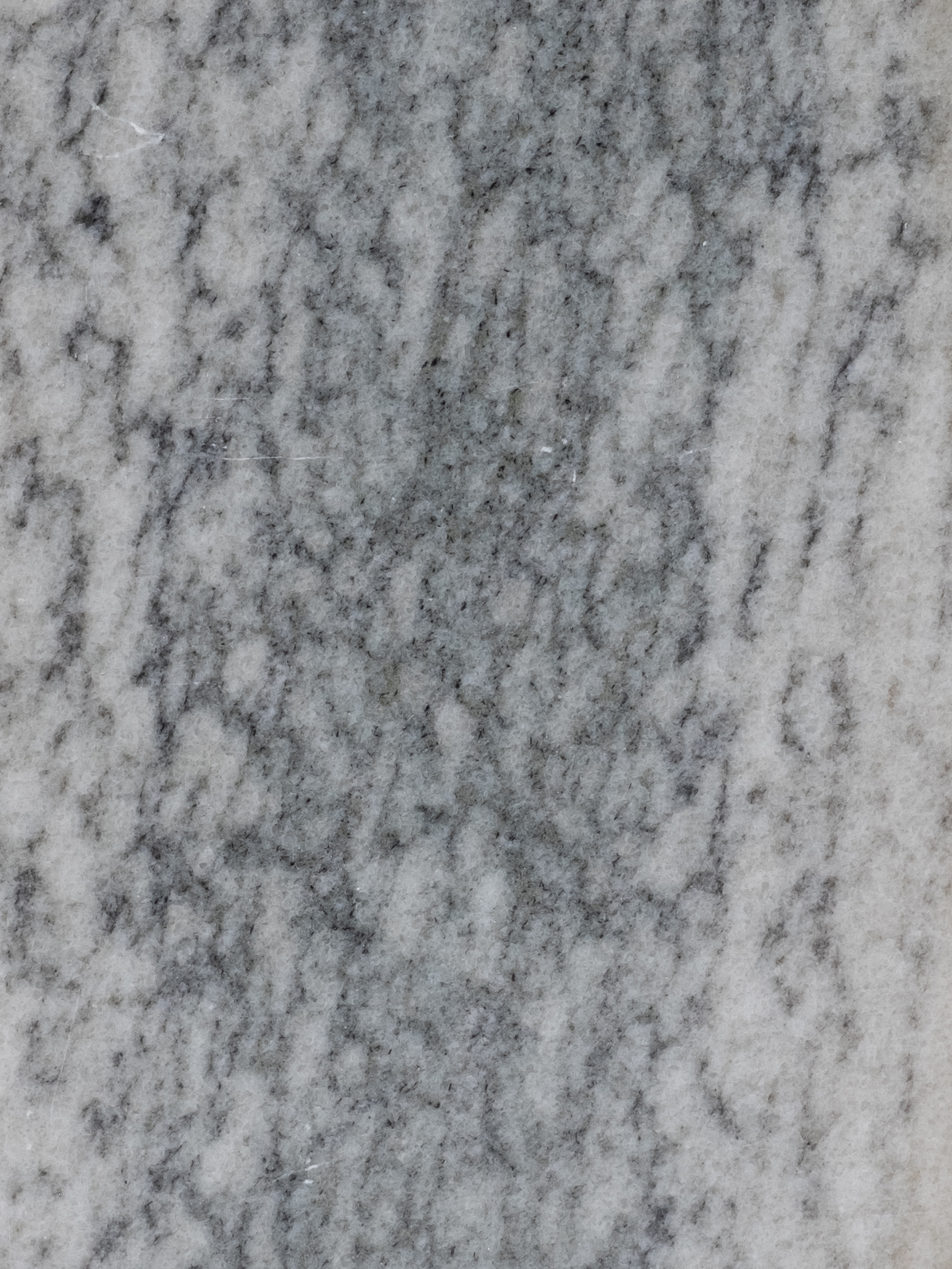
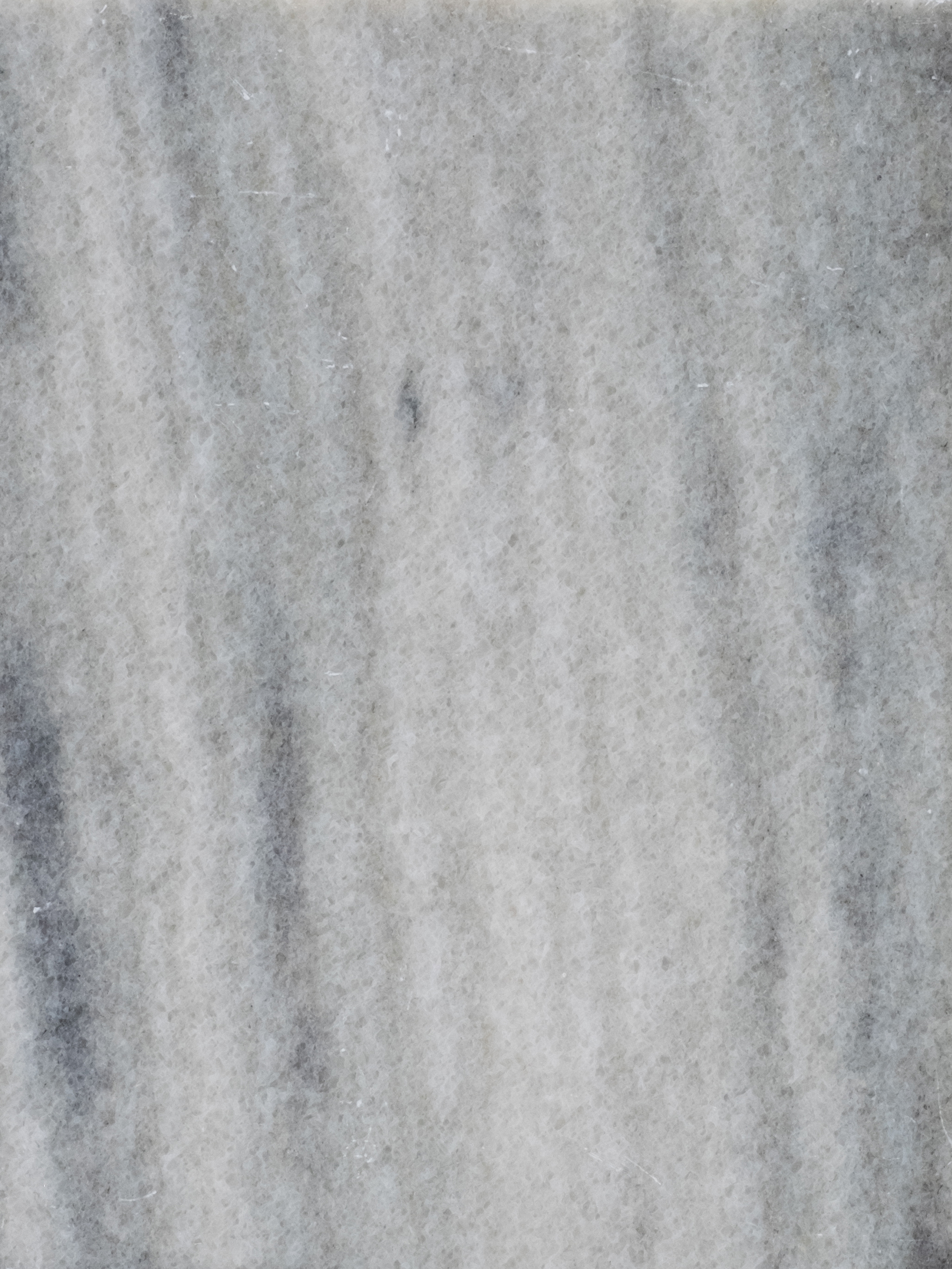
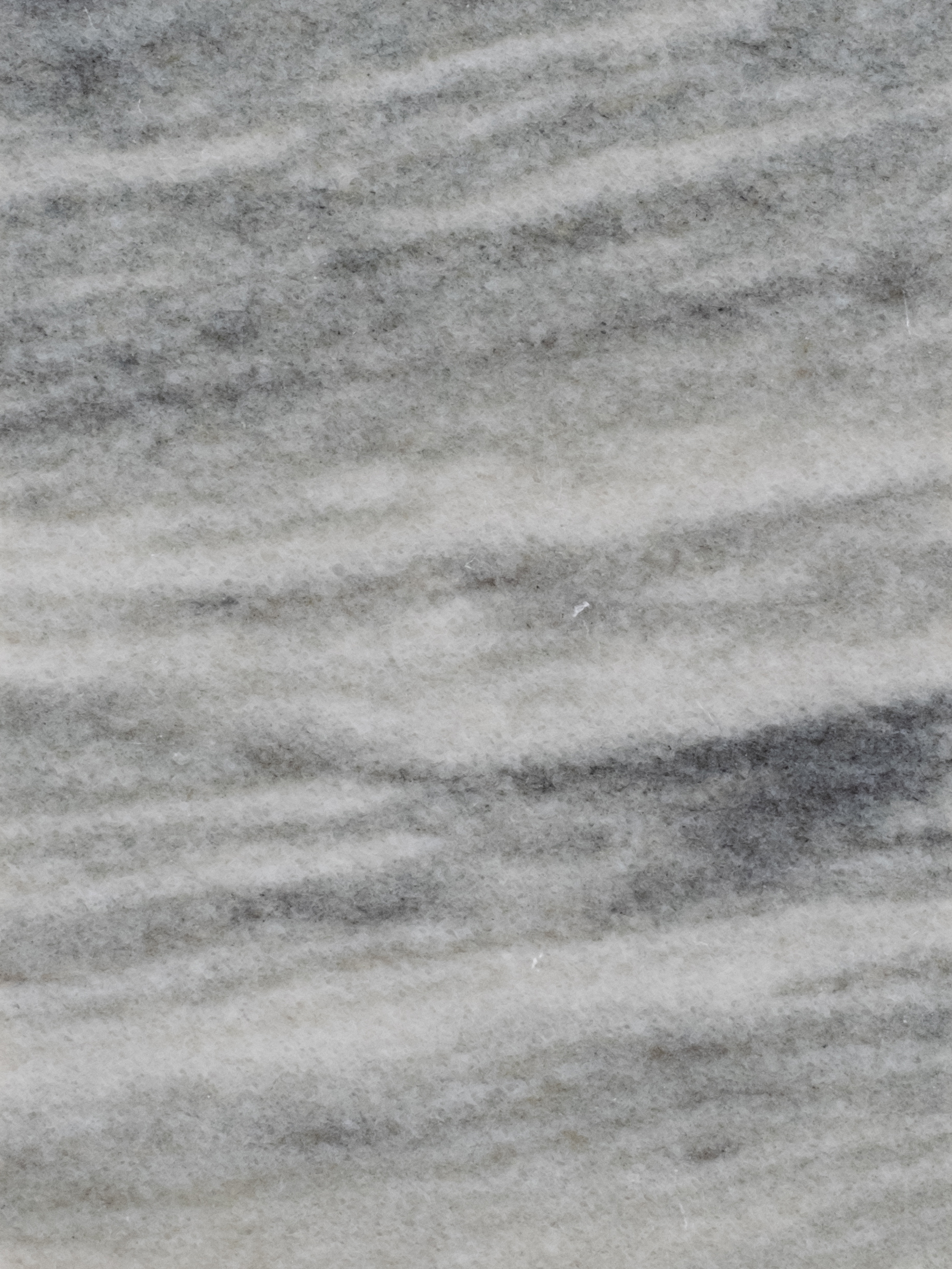
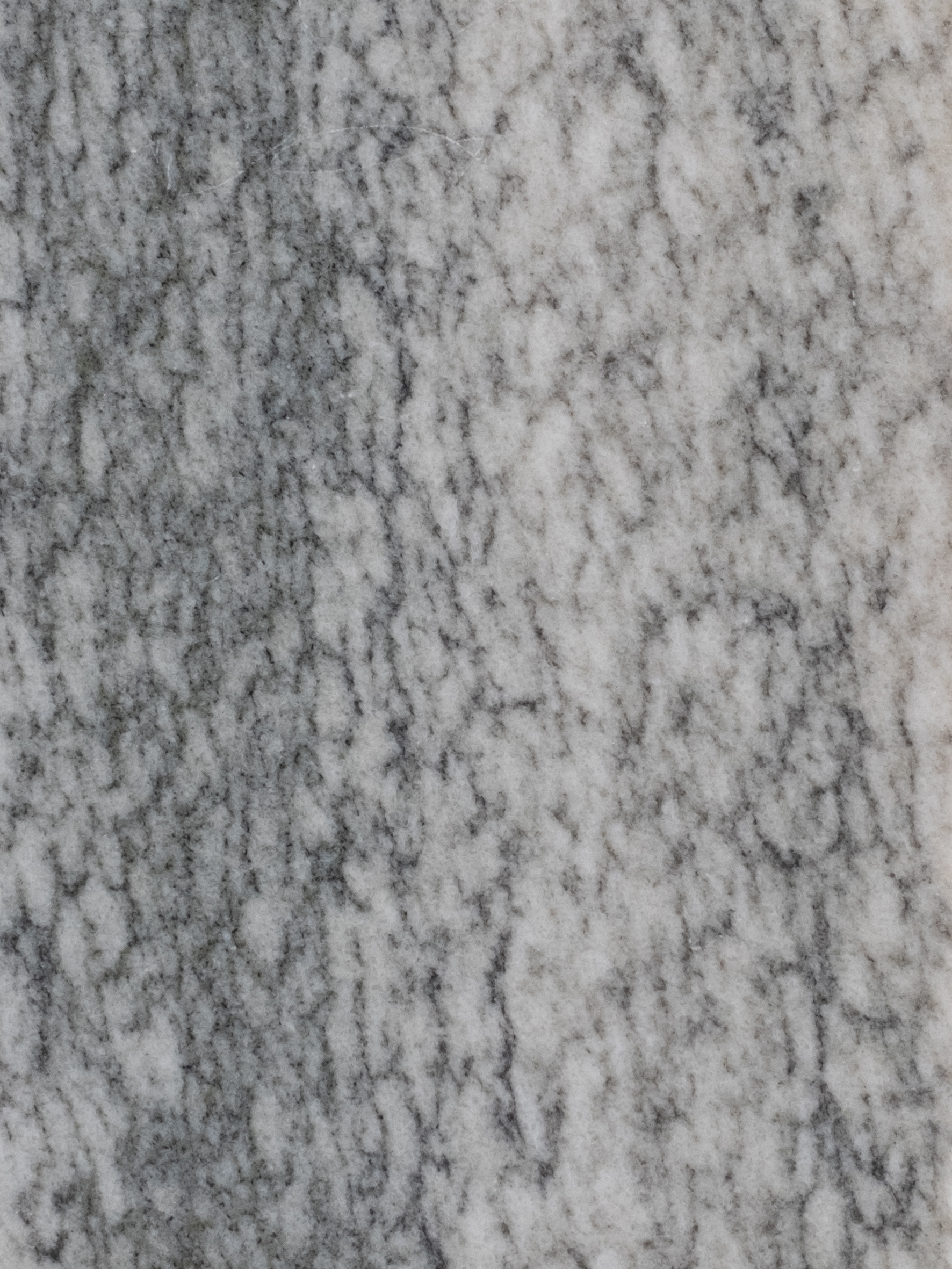
Cristallina marble, also known as Peccia marble, is a coarse-grained, compact marble characterised by different textures that can vary from streaks to prominent veins. In addition to the different textures, there are also different colours ranging from ivory white to grey, green and even brown.
It is quarried at an altitude of approximately 1200-1400 metres in a quarry in the Peccia valley.
The following varieties are mainly available on the market: White, Ivory, Pearl Grey, Green, Brown and Black and White.
We also have other secondary varieties: Arabescato, Violet and Fantastico.
Green marble is easily recognisable due to its similarity to Cipollino marble with white, green, light grey and even black streaks.
The mineral composition of this marble is very similar to that of Carrara marble.
The light varieties are composed of approximately 95-99% calcite, 1-5% dolomite, 0-1% quartz, hematite and pyrite.
In other varieties, it is composed of approximately: 80-90% calcite, 5-10% dolomite, 1-3% quartz, 1-3% light mica (muscovite), 0-1% dark mica (biotite, phlogopite), chlorite, hematite, pyrite.
Cristallina marble has high frost resistance, mainly due to its compactness and the interconnection of its mineral grains. However, as it is a calcareous marble, it remains sensitive to acids.
References for use of the material
Church of San Giovanni Battista, architect Mario Botta, Mogno (Switzerland).
The main source of the description
Material-Archiv. (2024). Cristallina-Marmor.
The original source of the characteristic values
Rapporto di prova della Mattec AG, Lenzburg del 1994: www.cristallina.net/public/userfiles/Pagina_Marmi/PDF_DE/Bericht_%2017_11_1994.pdf (aggiornato al 06.05.2018).
Certificato di prova dell’Ufficio di prova dei materiali di Würzburg del 1992: www.cristallina.net/public/userfiles/Pagina_Marmi/PDF_DE/Prufungszeugnis_LGABayern_01_04_1992.pdf (aggiornato al 06.05.2018).
Other resources