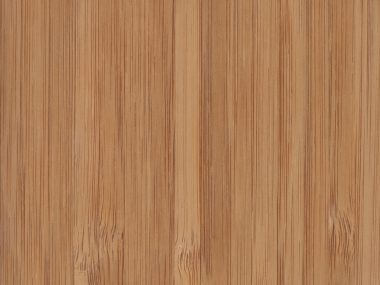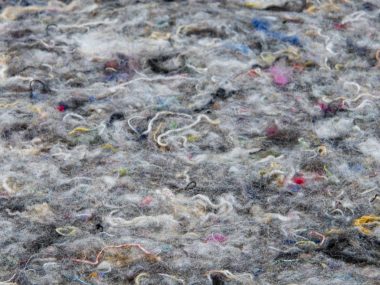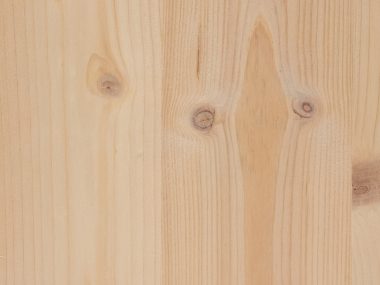

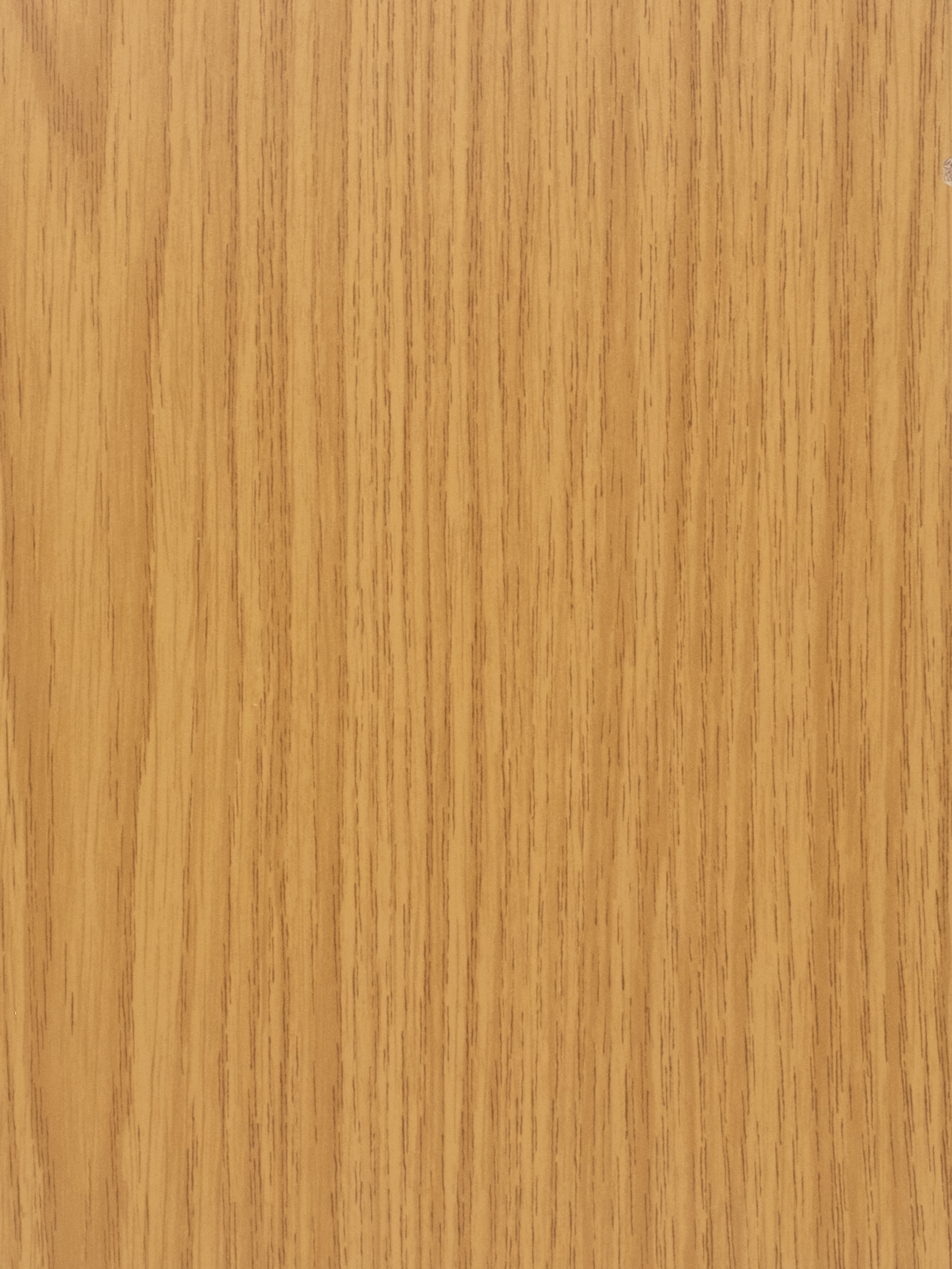

Chipboard panels are obtained by pressing a mixture of wood chips and synthetic resins at high temperatures and under pressure until they form solid panels.
There are different types of chipboard panels: single-layer panels, consisting of a homogeneous layer of evenly distributed wood chips, and multi-layer panels (three or more layers), in which a lighter central layer is enclosed between two denser surface layers. The compactness of the various layers depends on the grain size of the chips used: finer chips give greater density.
Production involves the use of recycled wood or less valuable woods, such as spruce, pine, beech, poplar and alder. These materials are crushed in large chippers to obtain chips for the outer or inner layers. The chips are then dried to a moisture content of between 3% and 5%, before being selected and mixed with resins.
The typical composition of chipboard panels includes between 70% and 90% softwood, with up to 20% hardwood added. The binder, usually a urea-formaldehyde resin, makes up between 5% and 10% of the total. In some cases, water-repellent agents, such as paraffins, are also added in proportions varying between 0.3% and 2%.
Thanks to their low cost and versatility, chipboard panels are widely used in the furniture industry and in the manufacture of interior fittings.
Main source of the description
Material-Archiv. (2024). Spanplatten. Material-Archiv.
Other sources
Natterer, J., Volz, M., Volz, M., & Herzog, T. (2001). Atlante del legno ([rist.]). UTET.