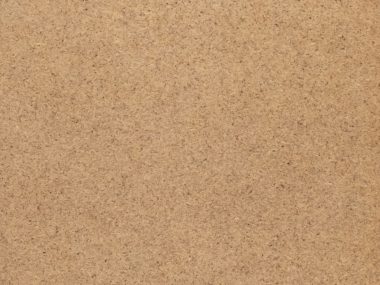
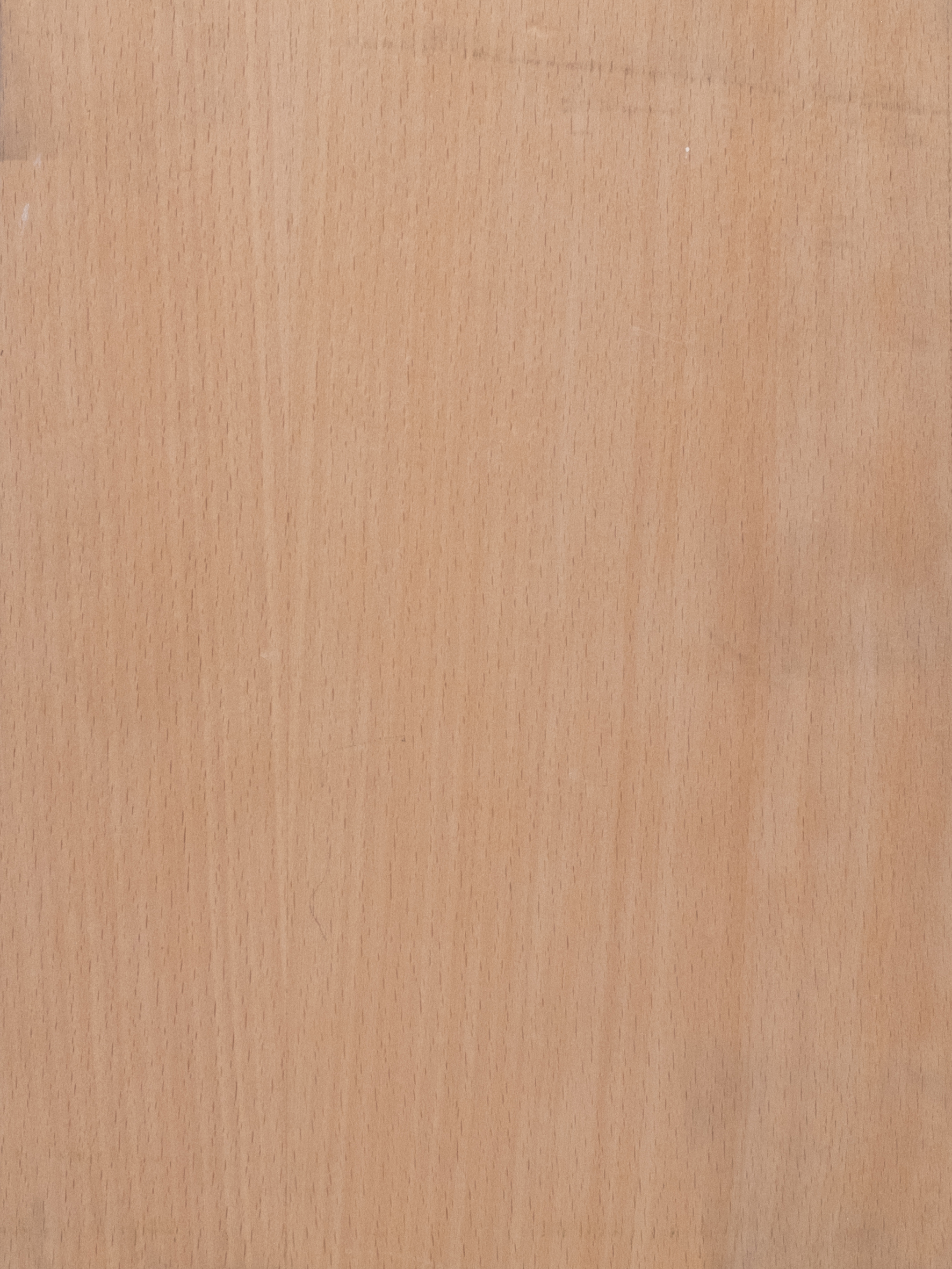

Medium-density fibreboard, known as MDF, is a material made from wood waste, usually from conifers such as pine or spruce. The wood is reduced to very fine fibres, which are then mixed with synthetic resin-based adhesives. This compound is then dry-pressed under high pressure and temperature, resulting in panels with a homogeneous and compact structure.
One of the main characteristics of MDF is its uniformity: unlike solid wood, it has no directional grain, which greatly simplifies its processing. The surface is smooth and regular on both sides, while the edges, although dense, are highly absorbent. This combination of properties gives the boards good resistance to both bending and breaking.
In terms of composition, MDF consists mainly of wood (between 80% and 83%), while the remainder includes glue (8-12%), water (6-8%) and a small percentage of additives – such as fungicides or flame retardants – ranging from 0.5 to 2.5%.
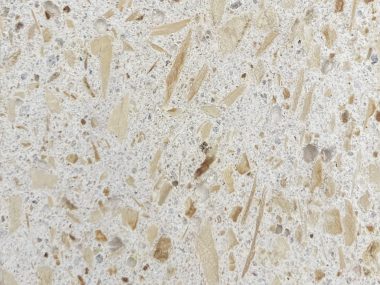
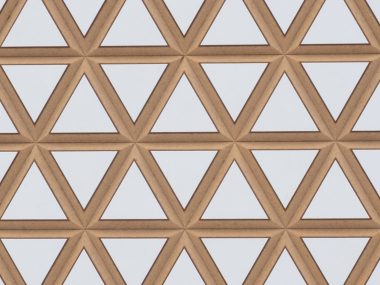
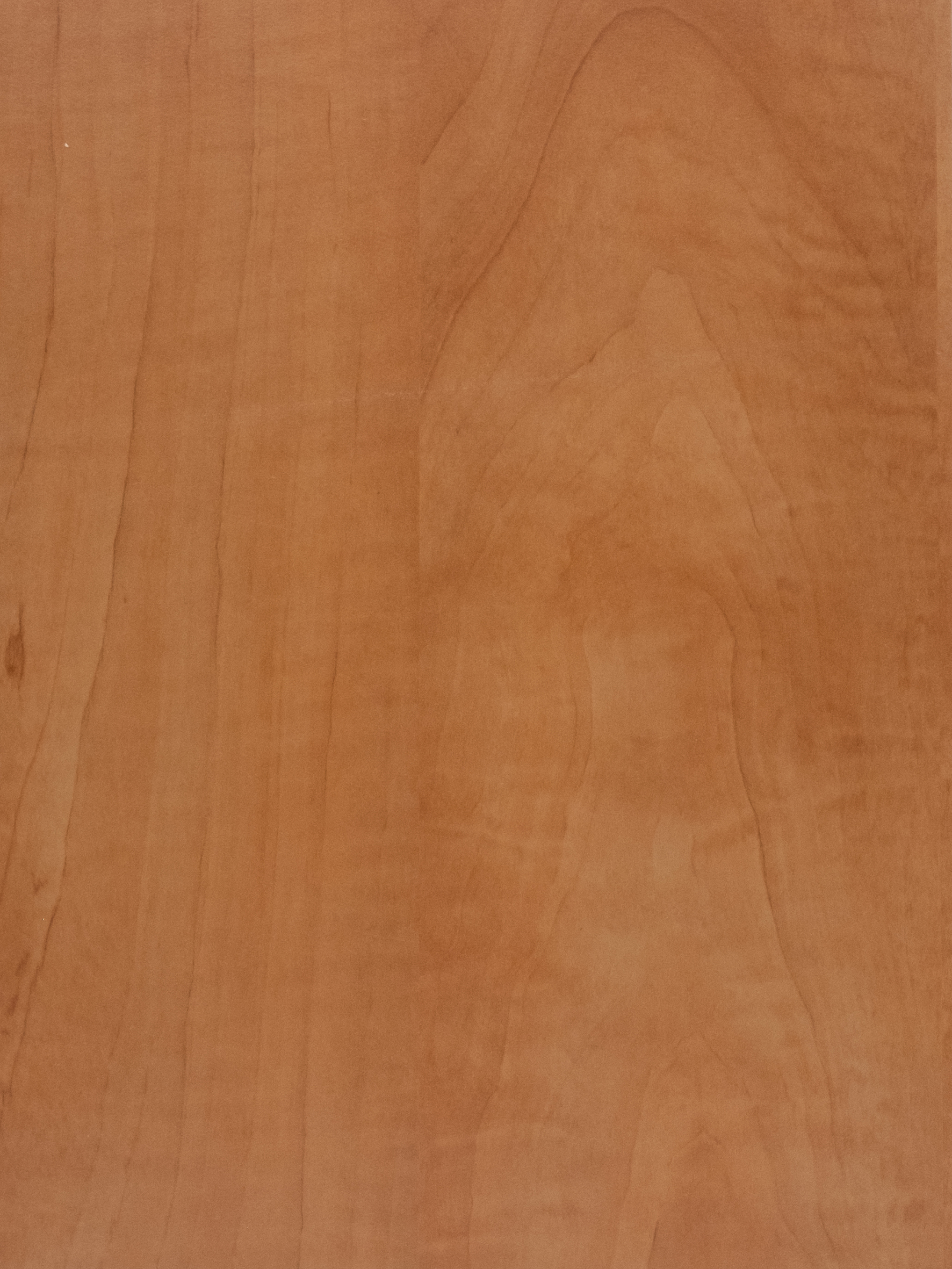
Thanks to their versatility and flawless finish, MDF panels are widely used in the furniture and interior design sectors. They can be easily painted in a wide range of colours – from black to yellow, including shades such as red, blue, green or grey – and, in some cases, also feature surfaces printed with wavy or decorative patterns.
Main source of description
Material-Archiv. (2024). Mitteldichte Faserplatten. Material-Archiv.
Other sources
Natterer, J., Volz, M., Volz, M., & Herzog, T. (2001). Atlante del legno ([rist.]). UTET.