Among conifers, pitch pine (also known as swamp pine) stands out for its excellent technical properties and for being the heaviest conifer wood currently available on the global market. This characteristic, combined with its strength, makes it ideal for numerous structural applications, particularly in the fields of hydraulic engineering, mining, shipbuilding and railway carriage construction. Fine-grained sections are also used in the production of high-quality furniture.
In addition to its structural value, pitch pine is also important for its high resin content, which is essential for the industrial production of rosin and turpentine. This dual mechanical and chemical utility has led to its widespread use, so much so that in America there is a lively market for old boards recovered from Wilhelminian-era buildings, which are prized for their strength and historical value.
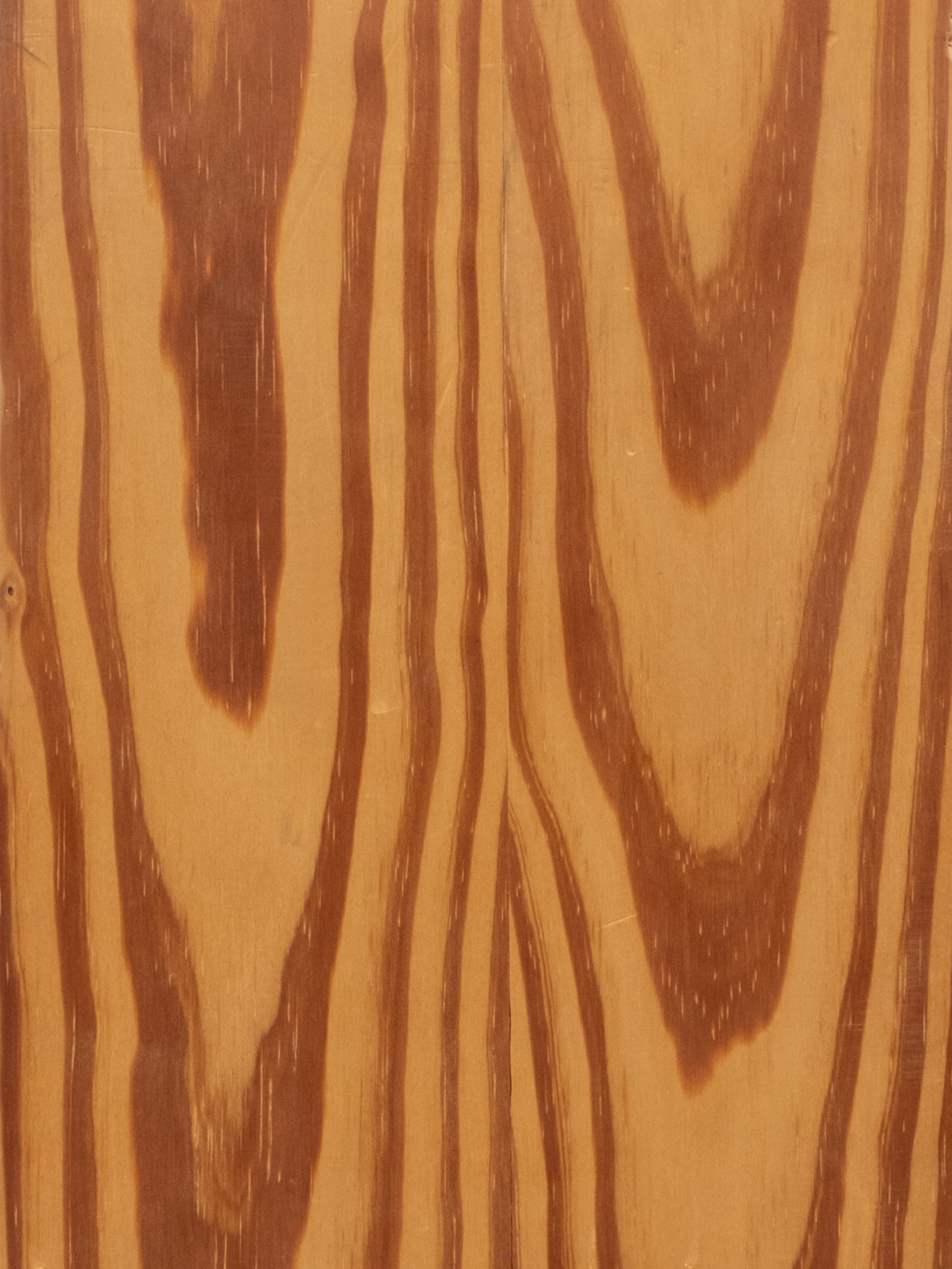
From an aesthetic point of view, pitch pine wood has a range of warm and varied colours: yellow, red and white tones blend together in a distinctive multicoloured effect. The sapwood is easily recognisable by its yellowish-white colour, which contrasts sharply with the heartwood, which takes on shades ranging from red to reddish-brown.
Another noteworthy feature is its moderate resistance to acids, a quality that further increases its versatility in industrial contexts and particularly demanding environments.
The main source of the description
Material-Archiv. (2024). Pitch Pine. Material-Archiv.
Other sources
Natterer, J., Volz, M., Volz, M., & Herzog, T. (2001). Atlante del legno ([rist.]). UTET.