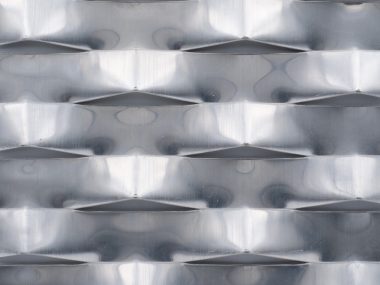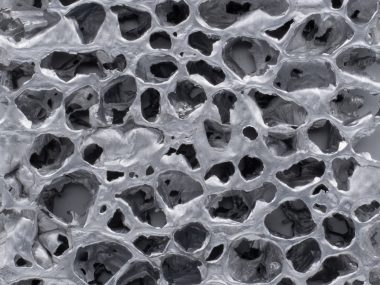






Copper is a non-ferrous metal with a characteristic reddish colour, valued for its remarkable ductility and ease of working. It differs from other metals because, apart from gold, it is the only one to have a natural colour other than grey or silver. Its structure makes it tough but also easily deformable: it can be rolled, forged, stamped and shaped without difficulty.
Over time, when copper is exposed to air, a thin protective layer called patina forms on its surface, initially brown in colour and, with prolonged exposure to atmospheric agents, tending towards blue-green shades. When it comes into contact with acetic acid, however, it develops what is known as verdigris. This metal also combines easily with other elements to form widely used alloys, including bronze and brass.
Since ancient times, copper has found numerous applications in everyday life: it was used to make tools, pots, boilers and even coins. Today, its use is even more widespread. It is essential in electrical engineering as an excellent conductor, but also in heating and cooling technology, for the production of pipes, heat exchangers, steam boilers, roofing and architectural cladding.
An important aspect is that recycled copper has the same quality as that extracted from raw materials: in Europe, almost half of the copper in use comes from recovery processes, making it a sustainable and valuable material.
Pre-patination consists of patinating one side with a special industrial process that promotes the development of an oxide layer on the surface of the copper. This process is similar to the natural patination of copper, which would take a long time to form when copper is exposed to atmospheric agents.
The main fields of application include electrical cables, soldering irons, heating and cooling coils, facade cladding, roofing and hot and cold water pipes.
The main source of the description
Material-Archiv. (2024). Kupfer.
The source of the characteristic values
Merkel, M., & Thomas, K.-H. (2008). Taschenbuch der Werkstoffe (7., verb. Aufl.). Hanser.