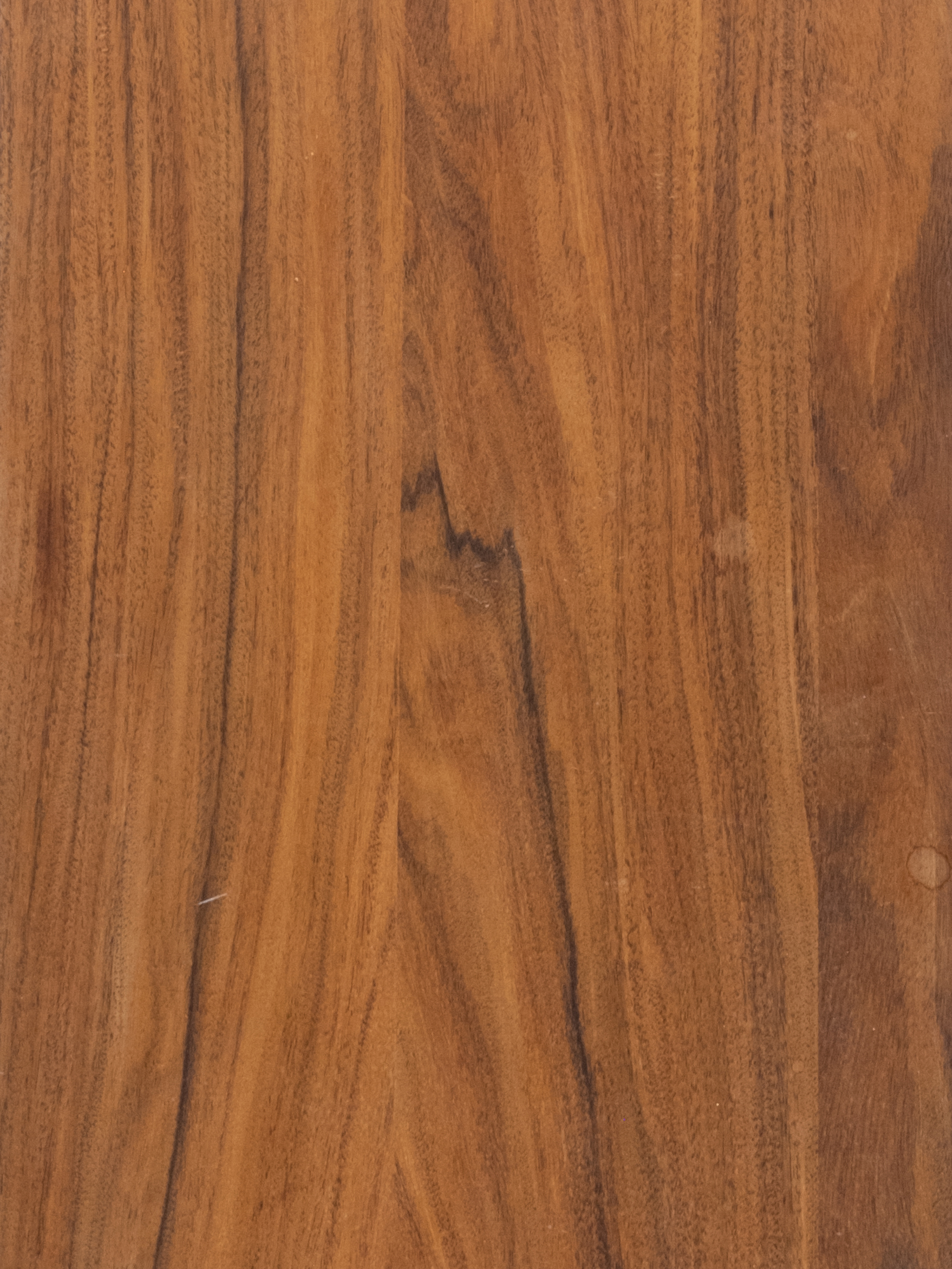
For over two centuries, rosewood has been one of the most prized woods on the market, known not only for its high value but also for its stability over time. Its physical characteristics make it particularly suitable for applications where aesthetics, hardness and precision in processing are essential.
Wood from East Indian rosewood is dense, very hard and durable. Although it shrinks moderately, it stands out for its durability and overall quality. These properties make it an ideal choice for high-end applications such as fine furniture, interior fittings, inlays, carvings and lathe work.
One of the most prestigious uses of rosewood is in stringed instrument making, where its sound qualities and aesthetic beauty are exploited to the full. However, solid rosewood is usually reserved for small objects, due to its high cost and rarity.
From a chromatic point of view, the wood has warm, rich tones. The sapwood is yellowish in colour, while the heartwood varies from yellowish brown to dark purple, crossed by prominent veins ranging from deep brown to purple brown. This natural contrast gives the products an elegant and distinctive appearance.
Main source of description
Material-Archiv. Palisander, Rio-. Material-Archiv, 2023. Stampa.
Other sources
Natterer, J., Volz, M., Volz, M., & Herzog, T. (2001). Atlante del legno ([rist.]). UTET.