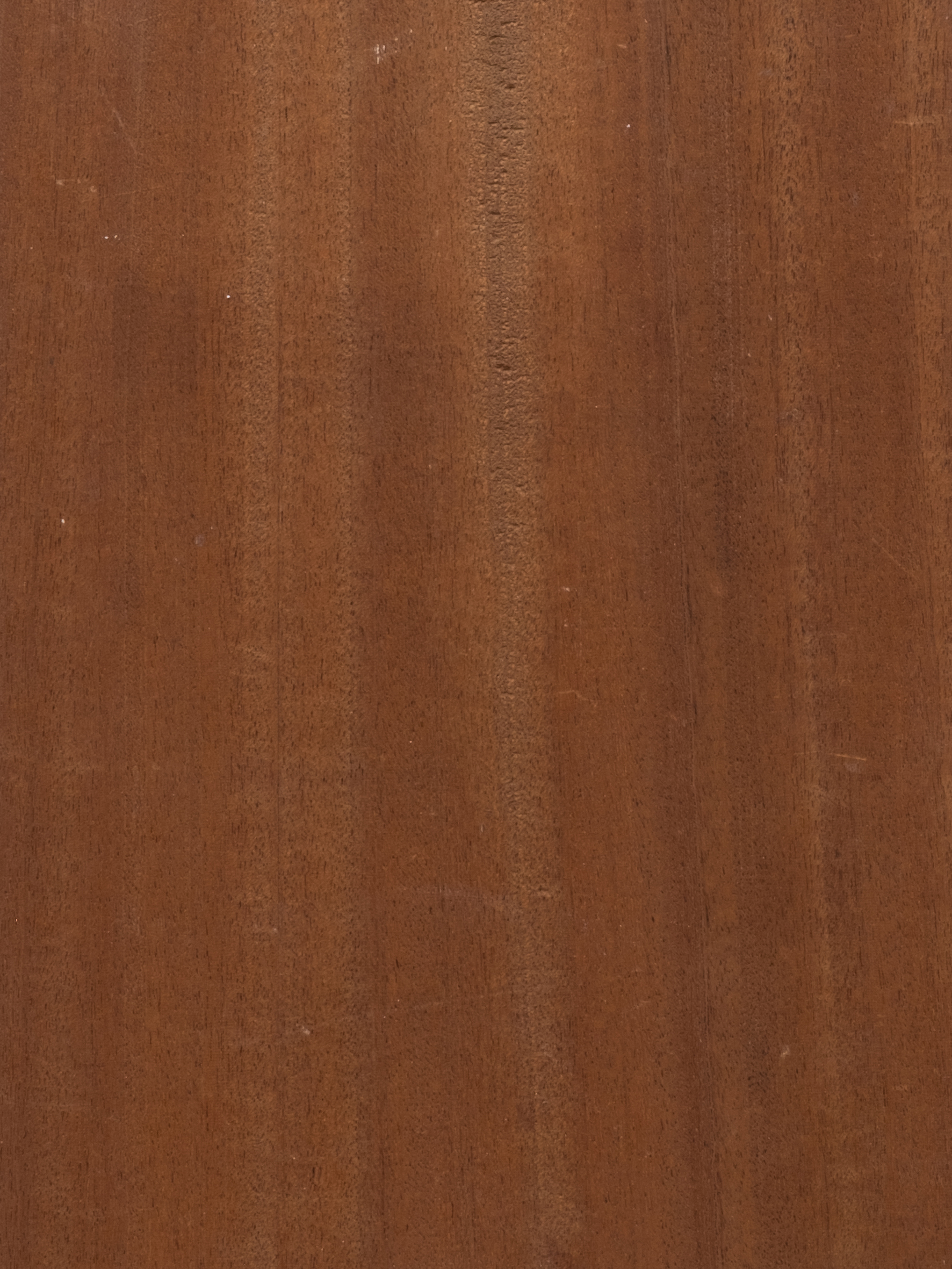
Teak is one of the most prized woods from Asia, valued for its durability, strength, stability and aesthetic beauty. It is easily recognisable by its slightly oily surface, characteristic scent and distinctive grain.
The colour of teak can vary from golden to dark brown, sometimes with streaks or spots in shades of brown-purple or black, depending on the area of origin. The sapwood, the outermost part of the wood, ranges in colour from greyish-white to light grey, with a width that can vary between 1 and 3 cm, sometimes even more. The heartwood, on the other hand, ranges in colour from golden yellow to yellow-brown and tends to darken over time to light or dark brown shades, often crossed by dark veins, which can range from purple-brown to black. It is widely used in the production of furniture and cabinetry, as well as in cladding and accessories for boats and ships. It is also used for high-quality interior furnishings.
Teak is naturally resistant to fungi and insects (including termites) and also offers reasonable protection against woodworm. In addition, it is distinguished by its resistance to atmospheric agents, acids and flame.
Main source of description
Material-Archiv. (2023). Teak. Material-Archiv.
Other sources
Natterer, J., Volz, M., Volz, M., & Herzog, T. (2001). Atlante del legno ([rist.]). UTET.